


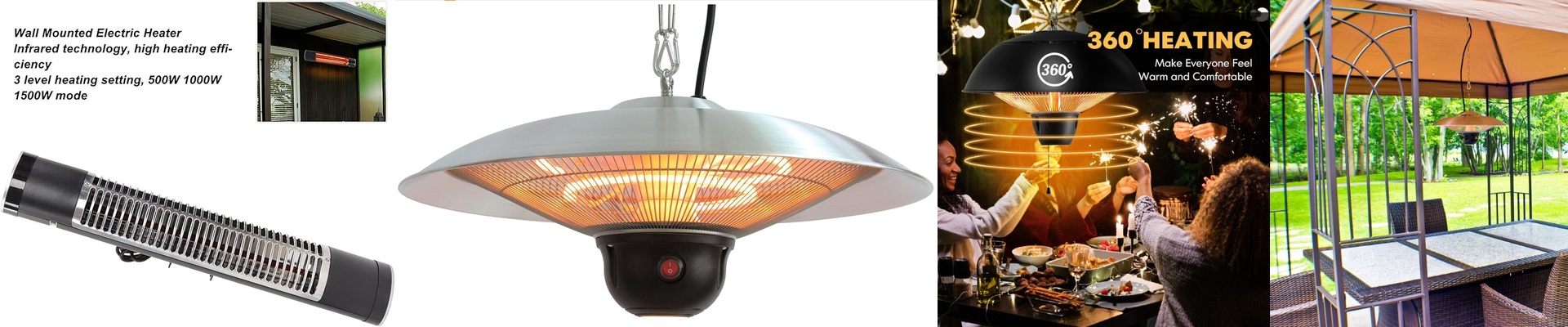

Why Your Gazebo Heater Actually Breaks (And How We Fixed It)
If you’ve ever used one of those 1500W ceiling heaters for a gazebo, you know the drill: they blast heat straight down to keep you warm. But here is the secret—the heating element itself is rarely what gives out. The real culprit? The lead-wire connection. Think about it. When you’re pushing 1500W, that spot where the electrical wire meets the quartz tube is getting hammered. It goes from freezing to scorching and back again, over and over. That kind of thermal stress is brutal.
The problem with the “cheap” way
Most budget heaters just use basic glue or loose crimps to hold things together. It works for a while. But eventually, that heat makes the insulation shrink or crack. Once that happens, the wires can shift, touch each other, and—pop—you’ve got a short circuit. And since these are outdoors, moisture just makes everything worse. It’s a recipe for a fried controller or, in a worst-case scenario, a fire.
How we do it differently
We decided to stop playing that game. Instead of just gluing wires and hoping for the best, we use a high-temp ceramic or silicone potting compound. It’s a process you usually only see in high-end industrial gear. It basically bonds the wire to the tube, creating a tight seal that locks out oxygen and moisture. But there’s a catch. The seal can’t be too stiff, or the glass will just snap when it expands. Too soft? It melts. We spent the time dialing in the material so it expands and contracts at the exact same rate as the glass. It just works.
The honest trade-off
Now, I’ll be straight with you: this makes the heater way safer, but it makes field repairs almost impossible. If you somehow manage to break a lead wire on one of these units, you can’t just grab a soldering iron and patch it up. You’d risk ruining the seal. You’ll have to replace the whole heating assembly. It’s a choice we were happy to make. I’d rather you have to replace a part once every few years than have a heater that shorts out after a single season.