Stop Leting Your Oven Slow Down Your Line
Ever feel like your production line is screaming to go faster, but your oven is just… lagging? It’s a common headache. You crank up the belt speed, but the standard heating elements can’t keep up. Suddenly, you’re staring at parts that aren’t cured right or, worse, under-heated pieces that you have to scrap. It’s frustrating. The problem is that off-the-shelf lamps are built for the “average” job. But you aren’t doing an average job. That’s why we stop using generic parts and build custom infrared modules instead.
Getting the heat where it actually matters
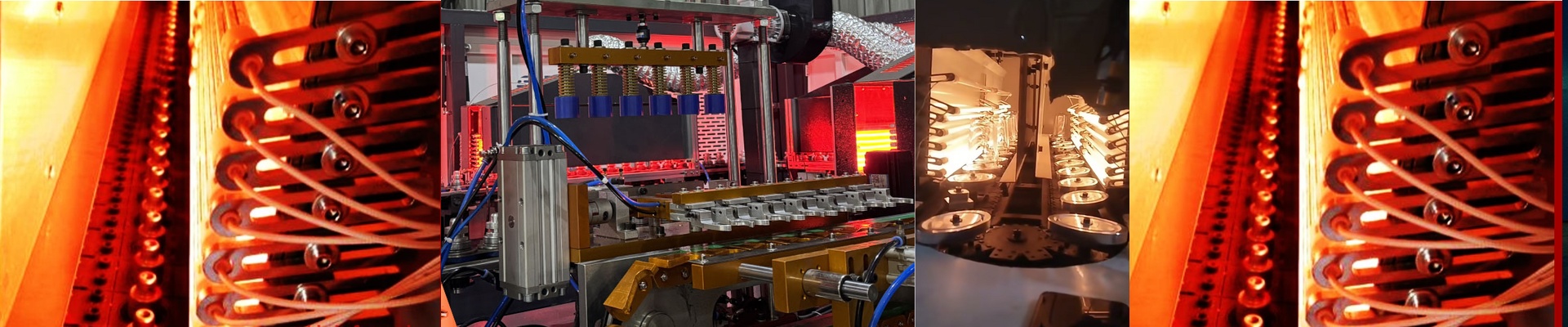
If you want to shave time off your cycle, you need more heat, and you need it now. Here’s the trick: we play around with the wattage-to-length ratio. By using short-wave infrared, the heat hits your material almost instantly. You aren’t sitting around waiting for the air inside the oven to get hot—the energy goes straight into the part. We basically pack a ton of power into a tiny footprint, concentrating all that energy right where the part rotates. It’s fast. Really fast.
It’s more than just a tube
We don’t just hand you a lamp and wish you luck. We build a full module. Every material absorbs heat differently. We use specific quartz glass and coatings to make sure the wavelength matches what your part actually needs. And we don’t ignore the gritty details, like how you’re actually going to plug it in. Whether you prefer R7s or Sk15 connectors, we make sure the fit is tight. In a rotary environment, things vibrate. A loose connection leads to arcing, and arcing leads to a very bad day. We make sure that doesn’t happen.
The reality check
Now, there is a catch. When you pump up the wattage to speed up your line, things get hot. Like, really hot. You can’t just slide a 2500W tube into an old frame and call it a day. If your cooling system isn’t up to the task, you’re going to melt your wiring or warp your reflectors. It’s a trade-off. But when you get the balance right? The bottleneck disappears. You get a perfect thermal profile every time, less waste in the bin, and a line that finally moves as fast as you want it to.